

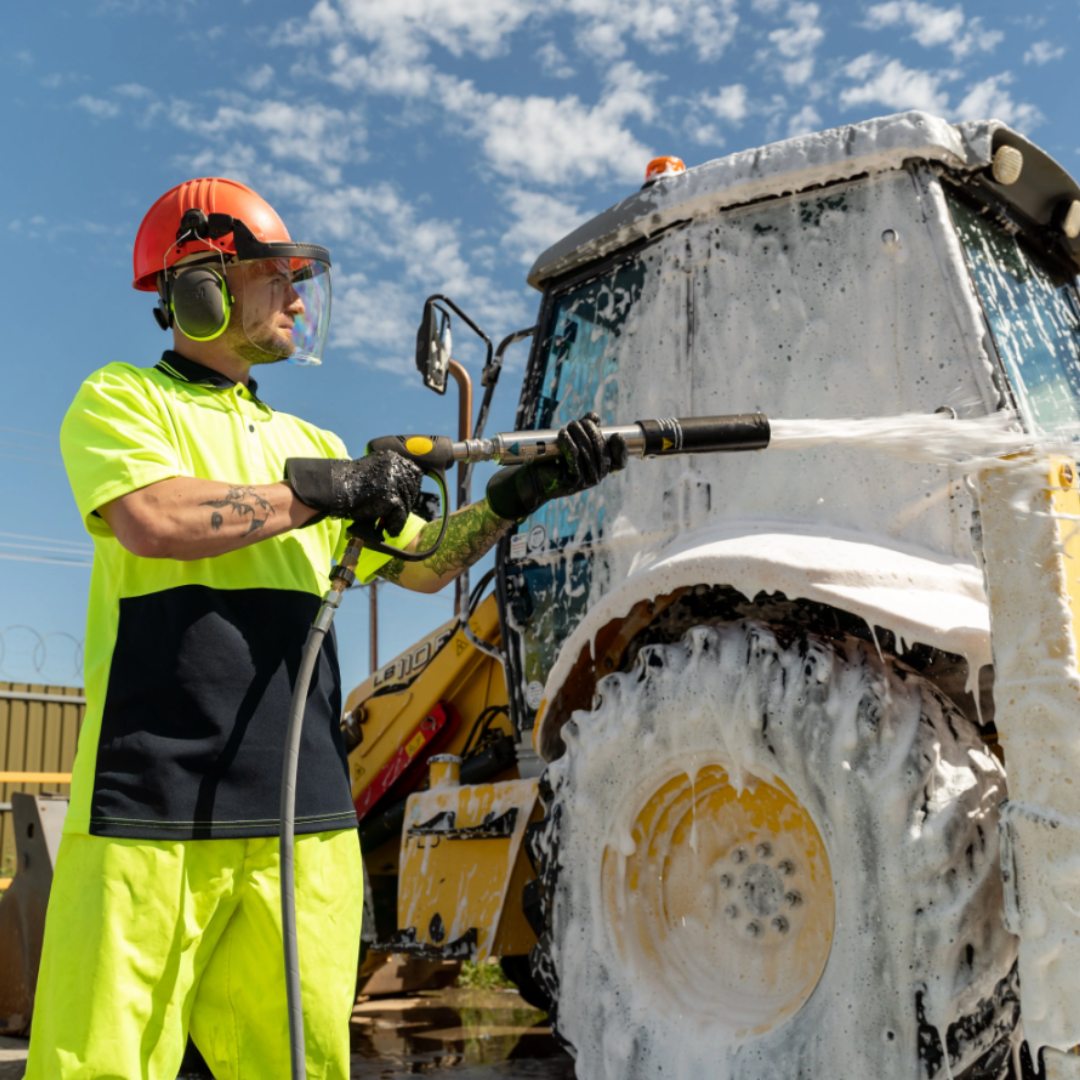
Choosing the right pressure washer is not about buying the biggest machine you can afford. It is about matching the equipment to the work you actually do, the surfaces you clean, and the environment you operate in. When you get this right, you clean faster, reduce fatigue, protect substrates, and avoid costly breakdowns.
Choosing the right pressure washer for you and your application should be determined by several factors.
1. Duty Cycle: How Often Will You Use It?
Duty cycle is the first filter. It tells you how hard you can run the machine and how long it should last under real use.
If you only wash a driveway once a month, a lighter residential unit may do the job. If you are running daily jobs or multiple operators, you need a commercial grade system with a pump and engine designed for constant use. This is where build quality, serviceability, and parts availability become non negotiable.
Ask yourself how many hours per week you will realistically run the machine. Then choose a unit built for that workload, not one that will survive it for six months and then fail mid season.
2. Pressure: Choose the Right Force for the Job
Pressure will determine how hard you must work it. The pressures required on the work you are conducting.
Pressure matters, but it is not the only factor. Higher pressure helps on hard surfaces and stubborn deposits, but too much pressure damages timber, strips paint, etches concrete, and blows out mortar joints.
A good rule is to match pressure to the most common substrate you clean. If most of your work is residential exterior cleaning, you rarely need extreme pressure. If you focus on heavy concrete restoration or industrial cleaning, higher pressure becomes more relevant.
Start with the lowest pressure that achieves results efficiently. Let the right detergents and workflow do the heavy lifting rather than brute force.
3. Flow or Volume: The Real Speed Multiplier
Flow or Volume of the machine. Flow will determine the speed by which you will work.
Flow rate is what makes you money. Pressure helps break the bond, but flow moves dirt and rinses efficiently. A machine with strong flow cleans large surface areas faster, flushes contaminants better, and reduces your time on the wand.
If you clean driveways, paths, car parks, and big exterior walls, flow matters more than most people realise. Higher flow also improves downstream chemical application and rinse performance.
When comparing machines, do not compare PSI alone. Consider the balance of pressure and flow based on the work you actually do.
4. Environment: Where Will You Operate?
Environment. Will it be Mine Spec, Electric, Diesel, Petrol, or a combination.
The operating environment changes everything.
If you work in sensitive areas, indoors, or where fumes are an issue, electric may be the correct choice. If you need full mobility and remote access, petrol or diesel becomes more practical. If you operate in high risk or regulated environments such as mining sites, you may require mine spec compliant equipment.
Also consider noise restrictions, ventilation, transport weight, and fuel availability. The right machine fits your locations, not just your cleaning tasks.
5. Hot or Cold Water: Choose Based on Stain Type
Hot or Cold water. Certain tasks require the application of hot water such as grease and gum removal; graffiti removal also requires hot water.
Cold water pressure washers handle general dirt, organic staining, and routine exterior cleaning well when combined with the correct detergents and softwash methods.
Hot water changes the game for petroleum based contamination and sticky residues. Heat helps break down grease faster, softens gum, and improves results on heavy staining where cold water struggles. If your work includes commercial forecourts, workshops, loading bays, or graffiti and gum removal, a hot water unit becomes a serious advantage.
Think of hot water as a productivity tool. It often reduces chemical usage and cuts labour time.
6. Match the Machine to the Jobs You Want More Of
A pressure washer should support your business direction. If you want more residential wash downs, you need a setup that is easy to transport, fast to deploy, and safe on mixed substrates. If you want more commercial contracts, you need higher duty cycle, stronger flow, hot water capability, and reliable service support.
Also consider accessories that influence outcomes, such as surface cleaners, turbo nozzles, hose reels, and chemical injection options. The right machine is only one part of the system.
7. Talk It Through Before You Buy
The above factors will allow you to make the right choice of equipment for you. We encourage clients to contact us to discuss their needs before buying anything so we can assist by walking them through the working scenarios that best suite their needs and then present options around these findings.
This step saves money and avoids regret purchases. A short conversation about your typical jobs, surfaces, water access, and transport setup can prevent you from buying a machine that is underpowered, overkill, or simply wrong for your workflow.
Softwash Australia choose Australian made Products where possible and are a stockist and reseller of Jetwave Products.
Choosing the right pressure washer is about clarity. Know your duty cycle, understand the pressure you truly need, prioritise flow for speed, match the machine to your operating environment, and decide whether hot water is essential for your stain profile.
When those pieces align, you get a setup that performs consistently, cleans efficiently, and supports your growth rather than holding it back.

Leave a comment
This site is protected by hCaptcha and the hCaptcha Privacy Policy and Terms of Service apply.