
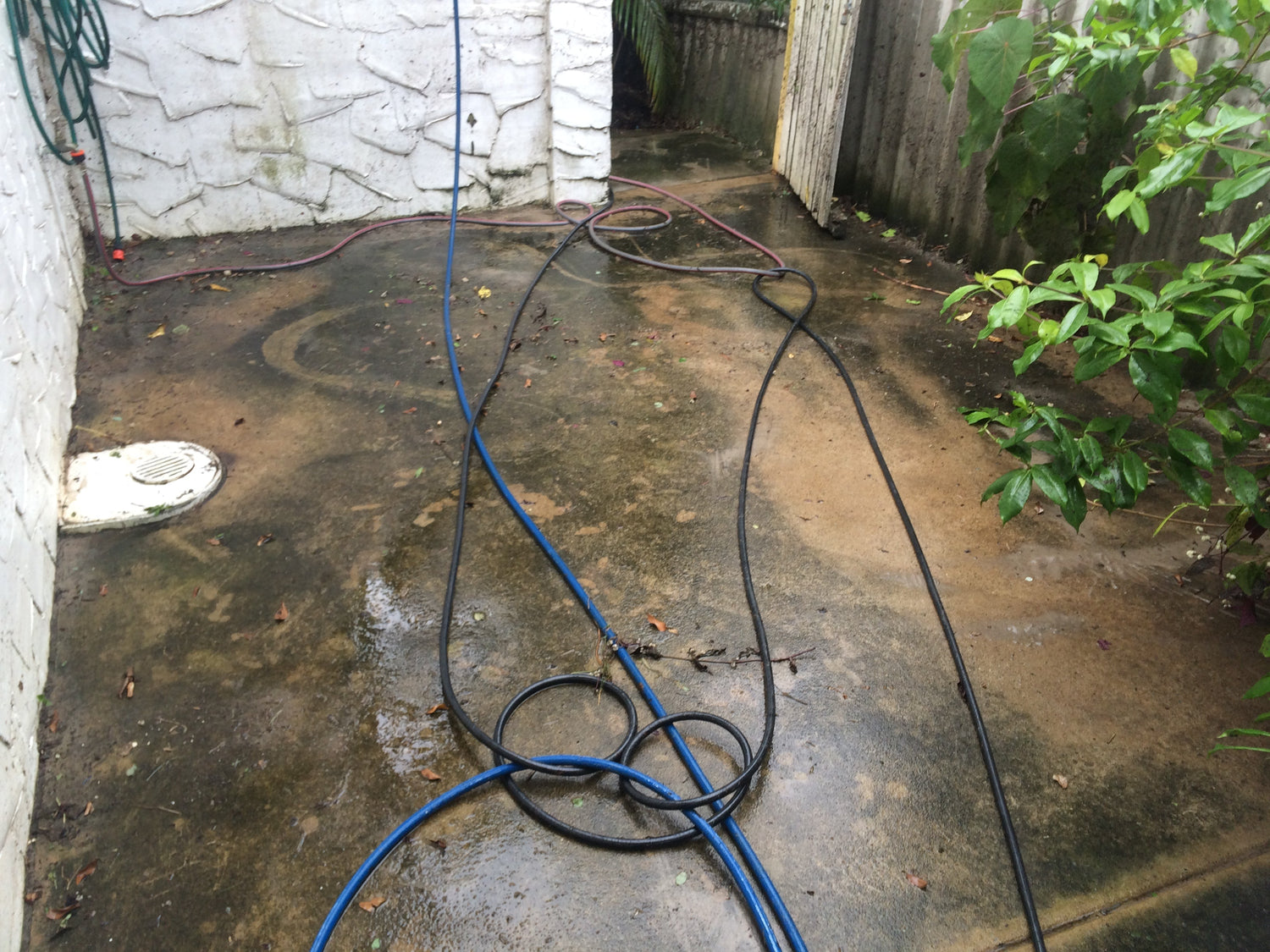
Rust stains on concrete look simple at first glance but treating them incorrectly can permanently damage the surface. Concrete is porous, and rust discoloration can sink into the upper substrate, especially when the stain has been there for weeks or months. Removing rust stains from concrete should be done with great care as the surface can easily be damaged beyond repair.
Rust is not just “dirt”. As rust is the residual of a chemical reaction of oxidisation of ferrous compounds such as steel rusting, the best way to remove it is with an alternate chemical reaction. When you use the right chemistry, you do not need aggressive pressure or harsh abrasion, and you dramatically reduce the risk of etching the concrete.
Below is the correct professional workflow, using the same careful, methodical approach that keeps surfaces safe while delivering strong results.
1. Identify the Source and Type of Rust Stain
Before applying any product, confirm what caused the staining. Common culprits include:
- Steel furniture legs and outdoor settings
- Rebar bleed through older concrete
- Fertiliser or metal fragments left on driveways
- Irrigation overspray with high iron content
- Tools, trailer parts, or machinery parked on wet concrete
This matters because active rust sources can keep bleeding into the slab. If you do not remove or isolate the source, the stain often returns.
2. Prep the Area Properly
Good prep prevents spread and surface damage.
- Clear the area of loose dirt and debris
- Lightly rinse the concrete to remove surface dust
- Protect nearby plants and metals from overspray and runoff
- Wear PPE including gloves and eye protection
Always test a small patch first. Concrete varies widely in finish and porosity, and you want to confirm the reaction before you treat the full stain.
3. Use the Correct Chemistry
An application of oxalic acid and phosphoric acid is a great combination. This pairing works because it reacts with the iron oxide staining and helps convert and lift it from the concrete surface.
Softwash Australia distribute a great product called SPITSER, which is a proven formula of Ox and Phos for this very common treatment. This gives you a controlled, repeatable method without guessing your acid ratios or mixing inconsistently.
This is the key point: do not attempt to remove rust with aggressive pressure alone. Pressure washing rarely removes embedded rust, and it can scar or etch the surface while leaving a shadow behind.
4. Application Method Step by Step
Simply apply the solution directly to the stain and watch it dissipate before your eyes.
- Apply SPITSER directly to the rust affected area
- Allow it to react visibly, do not rush this stage
- Keep the product on the stain, do not allow it to dry out
- Agitate lightly if required using a soft broom or brush
- Let the chemistry do the heavy lifting
If the stain is severe or older, the reaction may remove the majority immediately but leave a faint shadow. That is normal on deeply absorbed rust.
A few coats may also be required based on the severity and age of the stain and surface. Reapply in controlled passes rather than using a stronger concentration than recommended.
5. Rinse and Neutralise Correctly
Once the stain has lifted, rinse thoroughly.
You may wish to give the area a light pressure wash to neutralise the surfaces on completion.
- Use a light pressure rinse, not aggressive blasting
- Flush the area until runoff is clear
- Avoid directing runoff into gardens or sensitive drainage areas
If you are working near metals, painted surfaces, or decorative finishes, mask and protect them prior to application. Acid based products can mark certain surfaces if mishandled.
6. Dry Down and Assess the Result
Concrete looks different wet versus dry. Let the surface fully dry before deciding whether you need another pass.
If a shadow remains, treat again rather than forcing it with higher pressure or harsh abrasion. Multiple controlled treatments preserve the slab and usually produce the best finish.
7. Prevent Rust Stains Returning
Once the surface is clean:
- Remove the rust source where possible
- Use protective pads under metal furniture
- Avoid parking wet machinery on unsealed slabs
- Consider sealing concrete to reduce absorption going forward
Sealing does not stop rust from occurring, but it prevents deep penetration and makes future treatments faster and more effective.
Rust stain removal is chemistry first, pressure second. When you understand that rust is the result of oxidisation, the solution becomes clear: you counter it with the right chemical reaction, not brute force.
Using a proven oxalic and phosphoric blend like SPITSER gives you a reliable professional method. Apply directly, allow the stain to react and dissipate, rinse gently, then repeat if required. That is how you remove rust stains from concrete while protecting the surface you are trying to restore.

Leave a comment
This site is protected by hCaptcha and the hCaptcha Privacy Policy and Terms of Service apply.