

Timber is a beautifully natural material that brings warmth and character to outdoor and indoor structures alike. But timber is also sensitive, stains from water, grease, mould, tannins, or contaminants can be hard to remove without harming the wood grain or surface finish. Here’s a specialist guide to removing stains from timber while preserving its integrity.
Identify the Stain Type and Timber Condition
Before you begin any removal, it’s essential to understand what you’re dealing with:
-
Water stains / tannin bleed: Often appear as grey or dark patches, especially on weathered timber.
-
Grease, oil, food stains: From external spills or internal leaks.
-
Mould, mildew, algae: Organic growths that can embed themselves in timber fibres.
-
Dirt, discoloration, weathering: General fading, grime, or environmental staining.
Also note whether the timber is bare, sealed, painted, veneered, or oiled. Bare or lightly sealed timber tolerates more aggressive cleaning; sealed or coated surfaces require gentle approaches.
Preparation and Safety
-
Test a small patch: Always trial a small, hidden area to make sure your method won’t cause damage or colour change.
-
Protect surroundings & plants: Cover nearby foliage and non‑timber surfaces; pre‑wet surrounding plants to reduce chemical harm.
-
Wear protection: Use gloves, eye protection, and possibly a mask, especially when working with stronger chemicals.
-
Work in mild weather: Avoid direct harsh sunlight or rain. A cool, overcast day is ideal so cleaning agents stay damp and effective.
Gentle Methods First
Start with the mildest method and escalate only if necessary:
-
Soft water + mild soap / timber‑safe detergent - Mix warm water and a mild wood cleaner (or gentle dish soap) and dampen (not soak) the surface. Use a soft brush or cloth to lightly scrub with the grain, then rinse thoroughly with clean water.
-
Use a soft scrub and dwell time - For more persistent stains, apply a timber‑friendly cleaning solution, keep the surface wet, let it dwell as per label instructions, then gently scrub and rinse. Many softwash cleaning systems use surfactants and sanitiser to break down the stain without aggressive force.
-
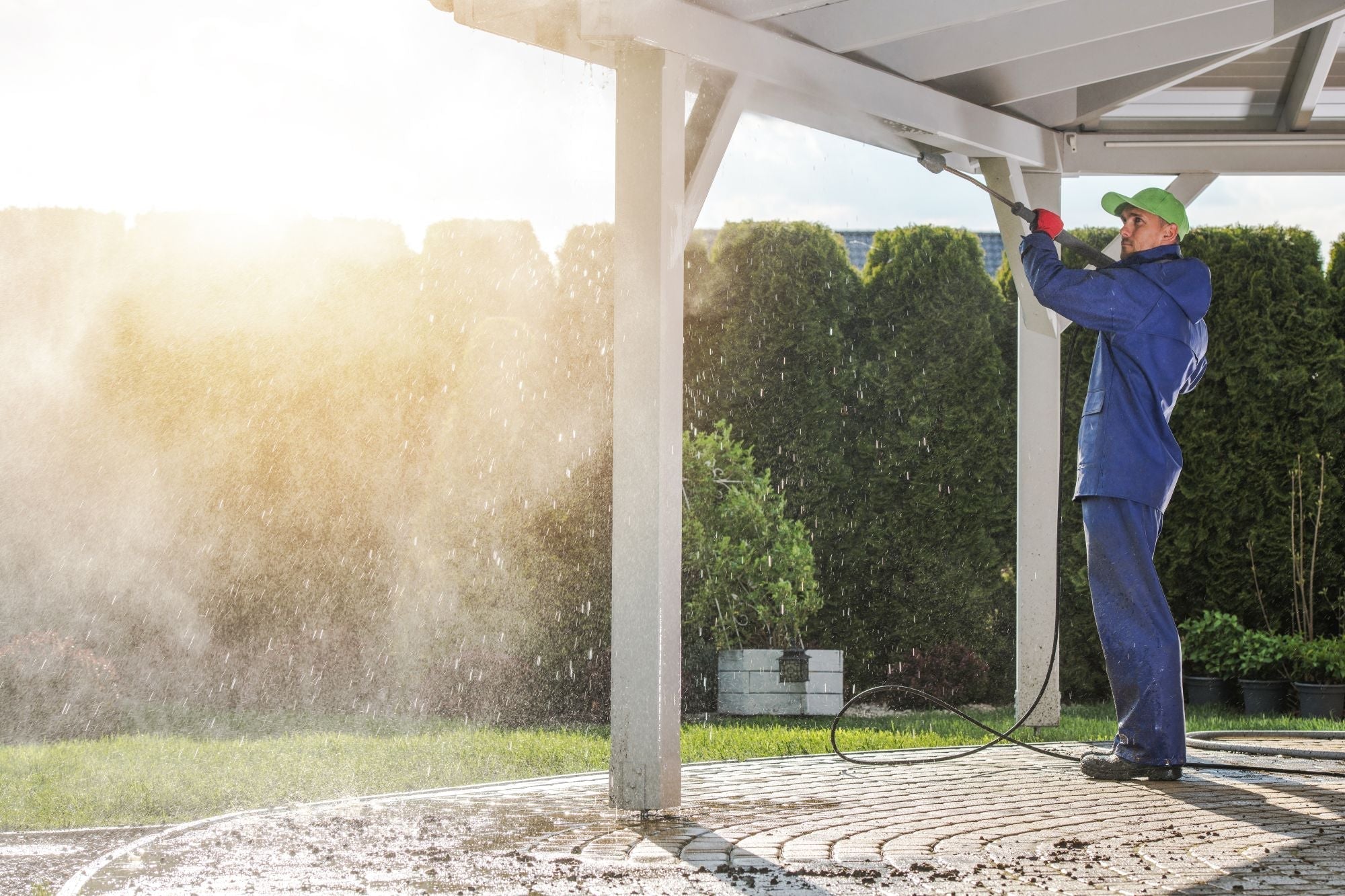
Low pressure rinsing only when safe - If the stain resists, use a very low pressure water rinse (start around 500 PSI or equivalent low pressure) from a safe distance. Avoid high pressure or narrow nozzles which can etch or gouge timber.
-
Spot treatments for tough stains - If the stain remains, use a spot treatment with a specialized stain remover formulated for timber (see product suggestions below). Use minimal quantity, apply carefully, and rinse well.
Step‑by‑Step: Removing Stains Safely
-
Clear dust, debris & loose matter - Start by brushing or blowing off surface dust, mould, and grit to prevent scratching.
-
Dampen the timber - Wet the area lightly with clean water. This helps chemicals distribute evenly and reduces rapid absorption.
-
Apply cleaning solution gently - Use a soft brush or applicator and work along the grain. Don’t use wire brushes or metal scrapers.
-
Watch dwell time - Follow the product’s recommended dwell period (always do this cautiously). Don’t let chemicals dry out, as that can damage timber fibres.
-
Gentle agitation - Light brushing may help lift stain residue.
-
Rinse thoroughly - Use clean water, low pressure, and flush from top to bottom. Rinse until water runs clear.
-
Inspect & repeat if needed - If faint staining remains, you may reapply carefully or try a weaker treatment rather than going aggressive.
-
Allow timber to dry properly - Ensure full drying before applying any finishes or protective coatings.
Integrating Softwash Principles
Softwash methodology—using low pressure and carefully formulated cleaning mixtures—is ideal for timber. Softwash Australia themselves use low pressure + surfactant + sanitiser to treat organic stains while protecting surfaces. Softwash Australia Use this same philosophy on timber: let chemistry do the heavy lifting rather than brute force.
Recommended Product Options for Timber Stain Removal
Below are specialist products you can consider. Always confirm their compatibility with your timber type and test a patch first:
-
OSMO Tannin Spot Remover: Effective for tannin bleed and water stains in timber.
-
WOCA Spot Remover: Good for small marks or discolouration, safe for wood surfaces.
-
Kärcher Wood Cleaner 3‑In‑1: A balanced wood cleaner that removes dirt and brightens without harsh impact.
-
Barrettine Wood Reviver: Revives aged or weathered wood, helping to reduce surface stains.
-
HG Extra Strong Stain Remover: For tougher spots; use carefully, diluted as required.
-
Fiddes Wood Surface Cleaner: Gentle cleaner good for general discolouration and light stains.
When using these, follow these principles:
-
Use lowest effective concentration
-
Always protect surrounding areas
-
Don’t allow chemicals to dry on the timber
-
Flush thoroughly after treatment
Aftercare & Surface Protection
Once the stain is removed:
-
Neutralise chemical residues if instructions require it (some products call for an acid rinse or buffer).
-
Let timber cure fully before applying oil, stain, or coating — typically 24–48 hours depending on climate.
-
Seal or oil the timber with a breathable finish to protect against future staining and UV damage.
-
Maintain regularly with mild cleaning to prevent stain build up, using softwash style gentle cleans.
-
Keep timber dry where possible — ensure drainage, trim overhanging vegetation, and avoid water pooling.
Removing stains from timber without damaging the surface is all about restraint and precision: begin with mild methods, use softwashing principles, and escalate only when necessary. Choosing the right cleaning chemicals, applying them carefully, and exercising patience will give you a clean, healthy timber substrate ready for protection or finishing without harm. Would you like me to draft a version of this article with Softwash Australia’s own product names and recommended application protocols?


Leave a comment
This site is protected by hCaptcha and the hCaptcha Privacy Policy and Terms of Service apply.