
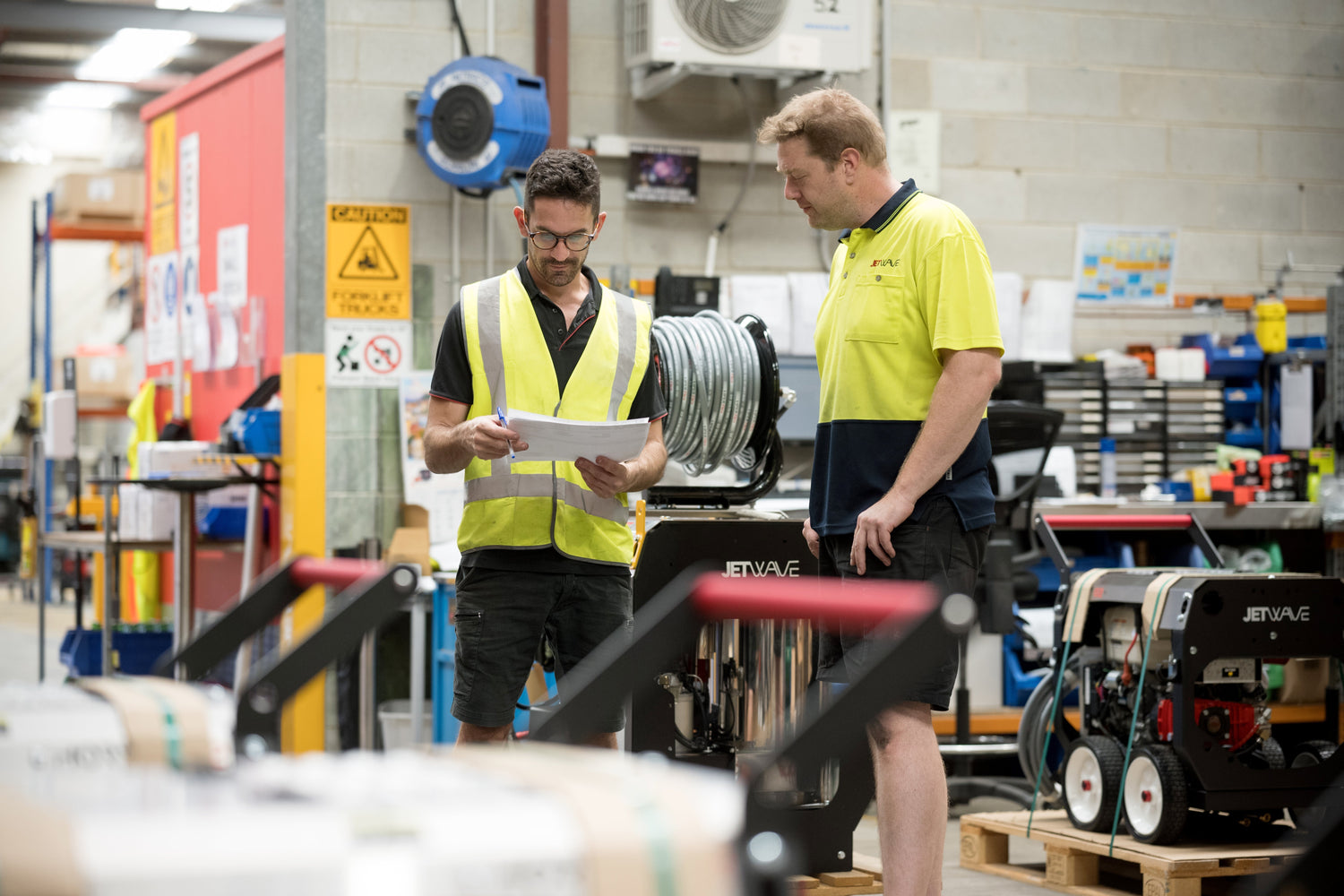
Hiring your first softwash employee is a turning point in your business. You’re shifting from solo operations to building a team, and doing that well requires more than just showing someone where the equipment is. Here’s a structured guide to training and managing your first softwash technician, ensuring safety, quality, and consistency from day one.
Define the Role Clearly from Day One
Before your new hire even steps onto a job, you need to have clarity on what you expect:
-
Job description: List duties (e.g., preparing chemical mixes, applying softwash to surfaces, protecting substrates, rinsing, cleanup, client communication).
-
Performance standards: What constitutes “good work” (coverage, dwell time, safety compliance, minimal damage).
-
Safety responsibilities: PPE use, hazard identification, spill protocols.
-
Learning milestones: What skills they must master in the first week, first month, and first quarter.
Having this written document gives both of you a reference and helps avoid misunderstandings later.
Structured Onboarding & Induction
A solid induction builds confidence and sets the tone. Use a phased approach:
a) Orientation & Theory
-
Introduce company values, safety culture, client expectations, and quality standards.
-
Teach chemical theory: how softwash solutions work, proper dilutions, dwell times, and interactions with materials.
-
Review equipment: pumps, spray rigs, nozzles, hoses, injectors.
You can draw from softwash training curriculums, such as SoftWash Systems’ Assistant Technician program, which covers topics like plant protection, property protection, PPE, and safe mixing practices.
b) Demonstration & Shadowing
-
Perform live demonstrations on real jobs—walk through the full process while explaining your steps and decision points.
-
Shadowing gives your trainee a chance to see mistakes (and corrections) in context.
-
Encourage questions and pause to explain “why” not just “how.”
c) Hands‑On Practice Under Supervision
-
Let the employee try tasks under your watch: measuring chemicals, masking surfaces, softwashing siding, rinsing, etc.
-
Start with less critical jobs or smaller surfaces until they build confidence.
-
Give corrective feedback immediately, focusing on improvement rather than blame.
d) Assessment & Review
-
At the end of probation (say 30 or 60 days), evaluate their performance against your milestones.
-
Use both written and practical assessments—e.g. mix a solution, apply to a test panel, clean a section of wall.
-
Adjust the plan if they show gaps in knowledge or technique.
Developing a Training Curriculum Template
Here’s a suggested modular training schedule:
|
Module |
Focus |
Duration |
Outcome |
|
Softwash Theory & Chemistry |
How biocides, surfactants, and dilution work |
1 day |
Understanding of chemical interactions |
|
PPE & Safety Protocols |
Masks, gloves, drift control, spill response |
½ day |
Safe handling practices |
|
Equipment & Setup |
Pumps, injectors, hoses, nozzles |
½ day |
Confident rig assembly |
|
Surface Types & Substrate Sensitivities |
Masonry, timber, render, windows |
1 day |
Know how to adjust method per surface |
|
Masking & Protection |
Vegetation, windows, metal, electrical |
½ day |
Minimising overspray damage |
|
Application Technique |
Spray angles, dwell, coverage, rinsing |
1 day |
Clean, consistent results |
|
Troubleshooting |
Stains, product failure, regrowth, weather challenges |
½ day |
Ability to adapt mid-job |
|
Quality Assurance & Inspection |
Checking finished work, final walkthrough |
½ day |
Consistency across jobs |
You may find parallels in general cleaning training guides, which emphasize the model: Communicate → Display → Implement → Review.
Ongoing Coaching and Feedback Loops
Initial training is not enough, managing someone well means continual coaching.
-
Daily brief and debrief: Before jobs, review plans; after, inspect outcomes and highlight improvements.
-
Random spot checks: Drop in unannounced to evaluate work quality, safety, and adherence to process.
-
Mentor on judgement calls: As your employee gains experience, include them in decisions (e.g. when to extend dwell time, adjust dilution).
-
Encourage self reflection: Ask them what they thought went well, where they struggled, and what they’d change next time.
Incentives & Accountability
To keep motivation high:
-
Set clear metrics: e.g. jobs completed per day, rework rate, client feedback, safety incidents.
-
Reward excellence: Bonuses, recognitions, “tech of the month” acknowledgments.
-
Accountability for mistakes: Errors should be learning opportunities, not punitive — unless safety rules are broken.
-
Growth path: Show them how they can advance (e.g. Lead Technician, Team Leader).
Safety & Compliance Must Be Non-Negotiable
Your first employee must internalise safety as core to the job, not optional. Include:
-
Risk assessments before every job.
-
SDS (safety data sheet) reviews for every chemical.
-
PPE checks and logs.
-
Environmental precautions: run‑off control, plant protection, drift management.
-
Incident reporting and near-miss analysis.
Some training programs exist in related industries (e.g. cleaning induction modules) to help with compliance.
7. Record Keeping & Progress Tracking
Maintain records for:
-
Training modules completed
-
Assessment results
-
Observations and feedback notes
-
Certificates, licences (if regulatory)
-
Performance over time (improvement, repeat issues)
These records guard you and help tailor further development.
Fostering a Safe, Supportive Culture
-
Be approachable, encourage communication when they face uncertain decisions.
-
Treat mistakes as coaching moments, not blame opportunities.
-
Model high standards yourself — your behaviour sets the tone.
-
Invite their input on process improvements — they may spot inefficiencies you overlook.
Training and managing your first softwash technician is a major step toward scaling your business. With structured onboarding, phased learning, continuous feedback, and an emphasis on safety and quality, you’ll build a technician who upholds your brand’s reputation. The investment you make now in training will pay dividends in consistency, client satisfaction, and team morale as your operation grows.


Leave a comment
This site is protected by hCaptcha and the hCaptcha Privacy Policy and Terms of Service apply.